
Reviewed by: Maria Antoka
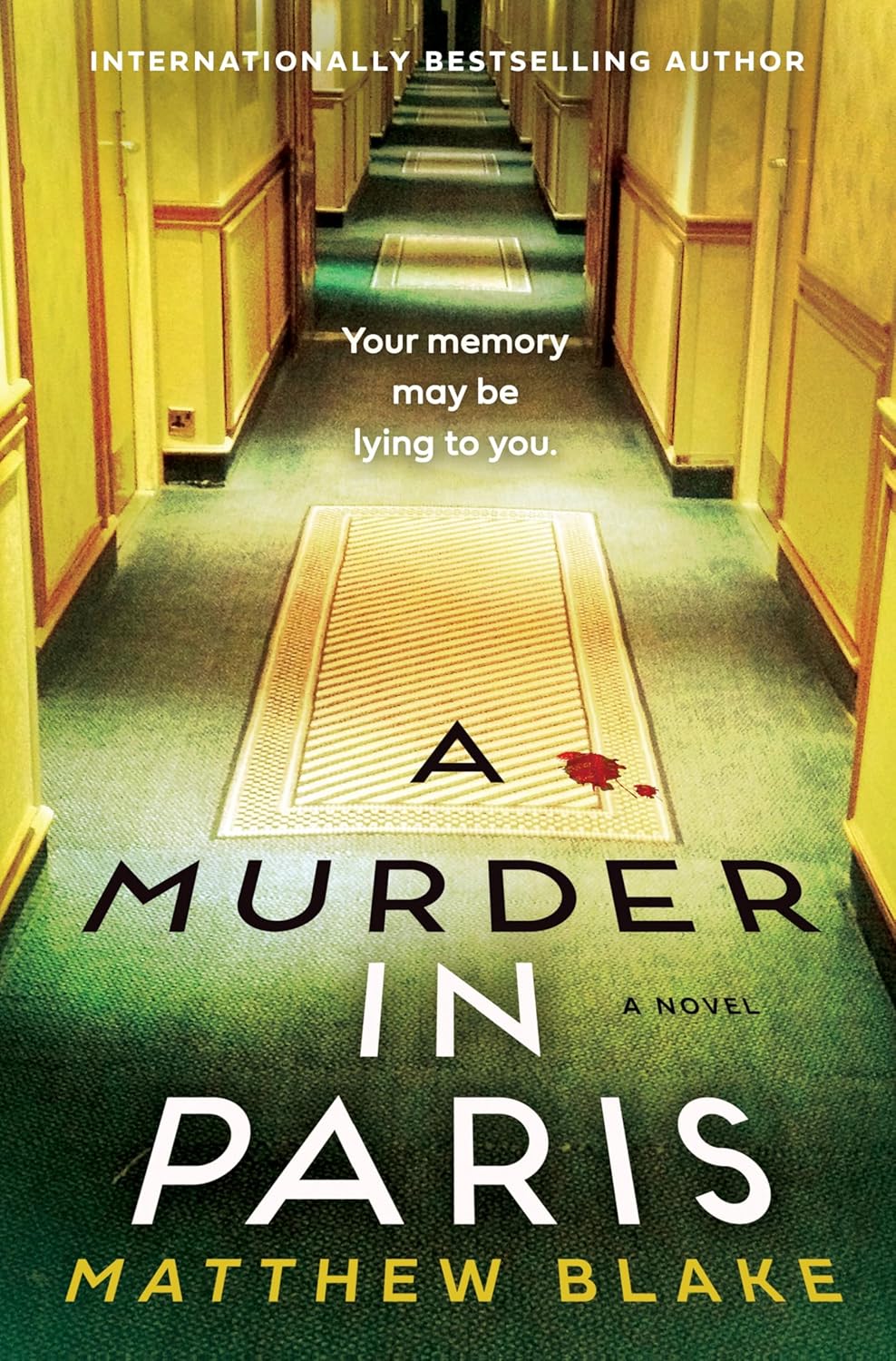
Matthew Blake clearly woke up one morning and chose complexity. This is a psychological whodunnit wrapped in trauma, memory recovery, and a heavy Parisian mood. Our protagonist, Olivia Flynn, is a psychotherapist who specializes in dredging up buried memories—convenient, considering her own history includes years on the couch with Paris’s most in-demand doctor and a famous grandmother who survived Auschwitz. Olivia practices in London, but gets yanked back to Paris when Gran insists she murdered someone at the same hotel where Holocaust survivors were once “reprocessed” back into life after the war. Because nothing says casual family emergency like that.
Naturally, Gran is promptly murdered (rude), and Olivia is left untangling a mystery that hops timelines like it’s late for a connecting flight—1945, a year ago, now, then back again—while introducing a parade of dysfunctional characters who all seem to need therapy… yesterday. Blake clearly did his research on unconventional psychotherapy practices, but he also lets Olivia’s internal monologue run wild. There are stretches where her thoughts go on long enough that I briefly considered starting my own recovery work. A sharper editor could’ve shaved this book down significantly and saved us all a mild case of temporal vertigo.
And yet. And yet. Despite my strong preference for linear storytelling (my brain likes a straight line, not interpretive dance), I still wanted to know who did it and why. The mystery holds, the ending delivers, and the emotional stakes—particularly surrounding memory, guilt, and survival—land where they should. A Murder in Paris is a solid, intelligent whodunnit that rewards patient readers. Just don’t be surprised if you need a bookmark, a timeline cheat sheet, and maybe a glass of wine to get through it.
Ready to read it for yourself? Use the affiliate link below to order—same book, same price, and it quietly helps fund this book-loving habit of mine.

 The Bookaholic Blog